Nigeria: Tiger Base police unit involved in rampant violations including extrajudicial executions, torture and extortion
Tag:
Report
Detainees routinely taken out of cell and shot dead Suspects tortured to make confessions Families of suspects that died suddenly…
USA: One year into President Trump’s return to office, authoritarian practices are eroding human rights
Tag:
Report
Marking one year since President Trump returned to office, Amnesty International today rang the alarm bells on increasing authoritarian practices in the United States…
Nepal: “We went there to raise our voice, not to be killed”: Nepal’s deadly crackdown on protesters
Tag:
Report
This briefing exposes Nepal’s failure to uphold peaceful assembly during “Gen-Z” protests on 8 September 2025, where 19 were killed…
USA: Torture and enforced disappearances in the Sunshine State: Human Rights Violations at “Alligator Alcatraz” and Krome in Florida
Tag:
Report
This report presents Amnesty International’s findings from a research trip to southern Florida in September 2025, to document the human…
Thematic paper series no. 5: Police and children
Tag:
Publication
Police in their daily work mainly deal with adult people, which means that their policies, instructions, and manner in which they approach people, through…
Colombia: Insist, Persist, Resist and never Give Up?
Tag:
Report
This report analyses the impact of the intervention of the Military Criminal Justice system on the persistent impunity for human…
China: Courts used as tools of systematic repression against human rights defenders
Tag:
Report
Chinese courts are systematically weaponizing vague national security and public order laws to silence human rights defenders, Amnesty International said…
Ecuador: It was the military. I saw them: Enforced disappearances in Ecuador at the hands of the armed forces
Tag:
Report
In this research briefing, Amnesty International analyses five cases of enforced disappearance that occurred in Ecuador in 2024, in the…
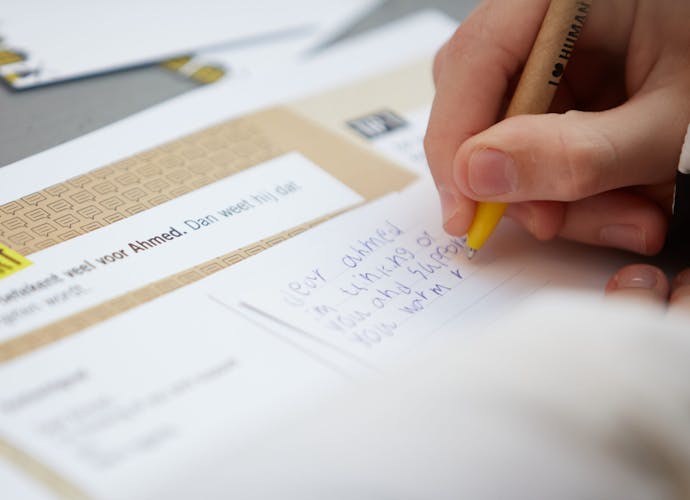
Op donderdag 8 april organiseert Amnesty International een schrijfavond. Je bent vanaf 19.30 uur van harte welkom in het Noaberhuus in Wijhe.
Type:
Schrijfactie
Locatie:
Noaberhuus Wijhe
Jubileumfestival Amnesty International Gouda: ‘Vier de mensenrechten’
Tag:
Event
13 juni 2026
Op 13 juni 2026 organiseert Amnesty International Groep Gouda een festival over vrijheid en mensenrechten.
Type:
Festival
Locatie:
Agnietenkapel
Open Tuinen Dagen Amnesty Amsterdam
Tag:
Event
19 - 21 juni 2026
Amnesty International stelt op vrijdag 13 juni t/m zondag 15 juni haar prachtige tuin open voor publiek tijdens de Open Tuinen Dagen 2025 in Amsterdam.